
Lumbar Support vs Back Brace for Sitting
Table of Contents
- Lumbar Support vs Back Brace: Key Differences for Sitting
- Lumbar Support Cushions: Comfort and Positioning
- Back Braces for Lower Back Pain: Support and Stabilisation
- How Long to Wear a Back Brace: Duration and Dependence
- Choosing Based on Your Situation
- Comfort, Fit, and Practical Trade-Offs
- When to Seek Medical Guidance
- Conclusion
- Frequently Asked Questions
Last Updated: October 15, 2026
Lumbar Support vs Back Brace: Key Differences for Sitting
Sitting for hours at a desk, in a car, or gaming strains your lower back. When comparing lumbar support vs back brace for sitting, both look similar but work differently, and choosing the wrong one wastes money and leaves you uncomfortable.
At ElevateSupport, we help people find the right sitting support. Lumbar support vs back brace for sitting matters because one cushions for comfort while the other stabilises your spine through compression and restriction.
What Each Option Does
A lumbar support cushion is a padded insert that sits between your lower back and your chair. It fills the gap where your spine naturally curves, and the memory foam adapts to your body shape, distributing pressure evenly.

A back brace wraps around your torso and uses compression, stays, or rigid panels to limit movement and stabilise your lumbar spine, reducing strain on injured or weakened discs.
The key difference: cushions add comfort; braces add stability. Many people confuse them because both address lower back pain, but they solve it through opposite mechanisms.
How They Affect Your Spine and Posture
Lumbar support cushions improve sitting posture by encouraging proper spinal alignment. When your lower back is supported, your shoulders relax back and your head sits above your spine, reducing neck and upper back tension.
Back braces limit movement, pulling your shoulders back and holding your spine straighter through external pressure. This reduces load on your lumbar discs and prevents slouching, but through restriction rather than comfort.
Both can reduce lower back pain, but through different pathways. Cushions work best for discomfort caused by poor sitting posture or lack of support.
Lumbar Support Cushions: Comfort and Positioning
Design and Materials
Our Memory Foam Lumbar Support Cushion uses contoured memory foam that moulds to your lower back's natural curve. It's wider at the base for stability, tapered at the top, with an adjustable strap that prevents sliding.
The breathable fabric cover prevents heat buildup, and memory foam slowly returns to shape, maintaining support throughout the day.
Cushions are lightweight and portable. You can move one between your office chair, car seat, and home sofa without difficulty. This versatility appeals to people who sit in multiple locations.
Best for Office, Car, and Gaming
Office workers benefit most from lumbar support cushions. Eight hours at a desk creates poor posture habits, and a cushion corrects this passively, you don't have to think about it.
Drivers and commuters find cushions reduce fatigue from hours behind the wheel. Car seats often lack lower back support, and a cushion fills this gap, making long drives noticeably more comfortable.

Gamers and anyone sitting 4-6 hours report cushions reduce lower back pain by preventing the slouching that happens when you're absorbed in work or play.
Back Braces for Lower Back Pain: Support and Stabilisation
How Back Braces Work
Back braces use compression and restriction to stabilise your lumbar spine. Our Adjustable Back Support Brace wraps around your torso with straps that tighten to create gentle pressure, reducing movement and stress on damaged discs or weakened muscles.
The brace also pulls your shoulders back, straightening your thoracic spine passively. Adjustable straps let you customise the fit and compression level.
Back braces work best when you have a diagnosed spinal condition: a herniated disc, sciatica, or muscle strain. They're also useful during recovery from back surgery or injury, when movement restriction is medically necessary.
Wearability While Seated
Back braces are wearable while seated but more restrictive than cushions.
The brace sits under clothing if you choose a breathable model. Our Self-Heating Magnetic Lumbar Support Belt combines compression with thermal therapy, embedded magnetic points and self-heating fabric warm your lower back while providing support.

Wearing a brace for 8+ hours daily requires finding one that balances compression with breathability. Too tight and you'll feel restricted; too loose and it loses effectiveness.
How Long to Wear a Back Brace: Duration and Dependence
Back braces aren't meant for indefinite daily wear. Extended use can weaken your core muscles because the brace does the stabilisation work your muscles normally would.
This is a critical distinction from lumbar support cushions. Cushions provide comfort without creating dependence. Braces, by contrast, should be a temporary intervention.
The dependence concern is valid: wear a brace constantly and your core muscles adapt and weaken, so your back feels unstable once you remove it. Use a brace short-term during pain or recovery, then transition to cushions or exercise-based support.
Choosing Based on Your Situation
Desk Workers and Remote Employees
If you work from home or in an office and experience lower back discomfort from sitting, a lumbar support cushion is your best choice.
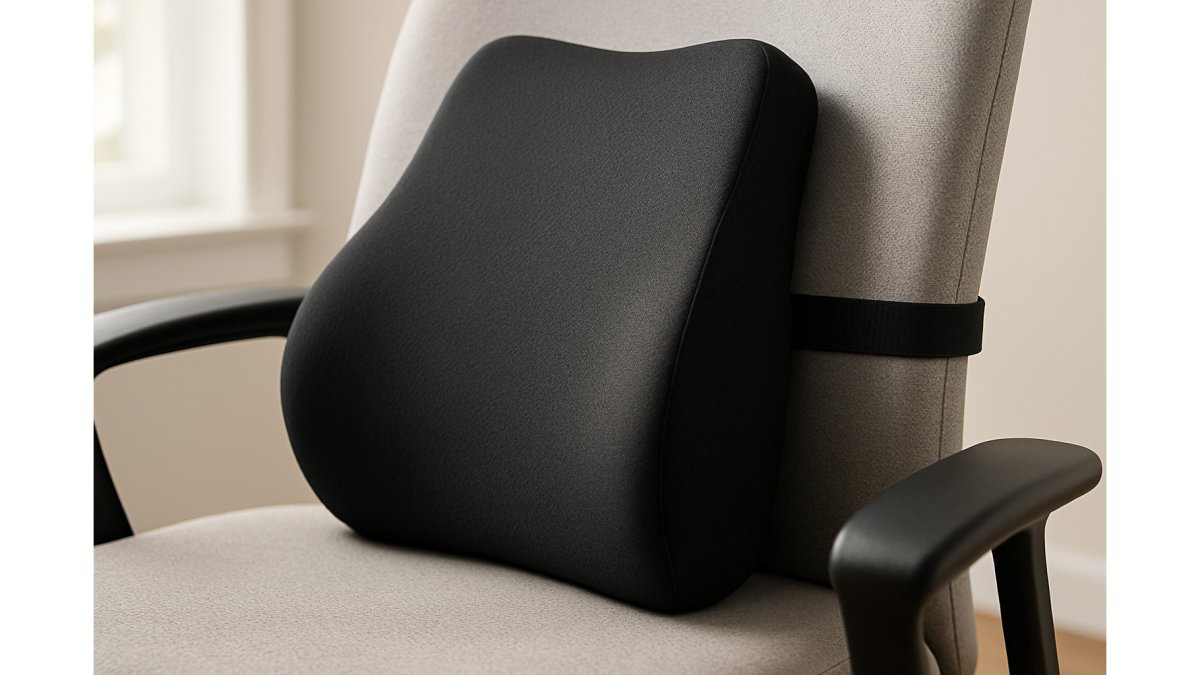
The Ergonomic Lumbar Support Cushion for Office Chair & Car (£29.99) works in both your home office and your car if you commute. The adjustable strap keeps it secure, and the memory foam provides consistent support throughout your workday.
If you have a diagnosed condition like sciatica or a herniated disc, start with a brace during the acute pain phase (2-4 weeks), then transition to a cushion for ongoing comfort and support.
Drivers and Commuters
Long drives create two problems: slouching and road vibration. A lumbar support cushion addresses both, holding your lower back in alignment and absorbing some vibration through the seat.
If you drive 4+ hours weekly, a cushion designed for car seats is worth the investment.
Memory Foam Lumbar Support Cushion →
If you have chronic sciatica or lower back pain triggered by driving, you might benefit from wearing a brace during your commute. The compression reduces movement, which can ease pain during the drive.
Gamers and Extended Sitting
Gaming sessions of 6-8 hours create lower back pain from lack of support and neck/shoulder tension from forward posture.
The Memory Foam Lumbar Support Cushion (£17.99) is affordable and effective for gaming setups. Place it behind your lower back in your gaming chair, and it stays put during long sessions.
If you develop lower back pain after gaming, a brace can provide short-term relief during recovery. However, for ongoing comfort during extended sitting, a cushion is the better long-term solution.
Chronic Pain and Medical Conditions
If you have a diagnosed spinal condition, consult your healthcare provider before choosing between a cushion and a brace.
For acute flare-ups, a brace provides stabilisation and pain relief. Our Self-Heating Magnetic Lumbar Support Belt (£25.99) combines compression with thermal therapy, which many people with chronic pain find helpful during difficult periods.
For daily comfort and support, a high-quality lumbar support cushion prevents pain from worsening. It encourages proper posture and reduces strain on your lower back during everyday activities.
Comfort, Fit, and Practical Trade-Offs
Breathability and Long-Wear Comfort
Lumbar support cushions prioritise long-wear comfort. Memory foam is breathable enough for 8+ hours daily, and the fabric cover wicks moisture to prevent heat buildup.
Back braces sacrifice breathability for compression. Worn all day, they accumulate heat and moisture, which is why they're meant for short-term use.
If you need long-term support, a cushion wins on comfort. If you need temporary stabilisation during injury recovery, a brace's discomfort is acceptable because you're only wearing it for 2-4 weeks.
Discretion and Appearance
Lumbar support cushions are completely discreet, sitting between you and your chair, invisible to anyone around you, ideal for professional office environments.
Back braces are visible if you wear them outside your clothing, though some models can fit under loose clothing. If discretion matters, a cushion is the clear choice.
Adjustability and Fit Across Seating Types
Lumbar support cushions are highly adjustable. The strap lets you position the cushion exactly where you need it and move it between chairs and vehicles, and memory foam adapts to different body shapes.
Back braces come in sizes and require proper fitting. An ill-fitting brace loses effectiveness and becomes uncomfortable. If you need to share a brace between people or use it in multiple settings, you'll likely need different sizes.
When to Seek Medical Guidance
If you have a known spinal condition, or previous back surgery, ask your healthcare provider whether a cushion or brace is appropriate.
If lower back pain develops after an injury or accident, seek medical evaluation; a brace might be necessary during recovery, but only a provider can determine this.
For general lower back discomfort from poor posture or lack of support, lumbar support cushions are a safe first step. If pain persists, consult a healthcare provider.
Conclusion
Lumbar support cushions and back braces solve different problems. Cushions provide comfort and encourage posture through soft support; braces provide stability and restrict movement through compression.
ElevateSupport's Memory Foam Lumbar Support Cushion (£17.99) delivers ergonomic support designed for everyday sitting at your desk, in your car, or while gaming.
| Support Type | Best For | Wear Duration | Comfort Level | Cost |
|---|---|---|---|---|
| Lumbar Cushion | Daily sitting, office, car, gaming | All day, every day | High comfort | £17.99-£34.99 |
| Back Brace | Acute pain, injury recovery, stabilisation | 2-4 weeks | Moderate comfort | £17.99-£25.99 |
| Magnetic Lumbar Belt | Chronic pain, thermal therapy | 2-4 weeks or as needed | Moderate comfort | £25.99 |
According to the NHS guidance on back pain management, maintaining proper posture during prolonged sitting reduces strain on your lumbar spine and prevents long-term discomfort.
Research from ergonomic workplace studies in occupational health shows that ergonomic seating support significantly reduces musculoskeletal complaints among desk workers.
A clinical review of lumbar support interventions found that properly fitted lumbar support improves comfort and reduces pain for people with occupational lower back pain.
Frequently Asked Questions
What is the difference between lumbar support and a back brace?
A lumbar support cushion sits between you and your chair to add comfortable padding and maintain the natural curve of your lower back. A back brace wraps around your torso to restrict movement and stabilise your spine through compression. Lumbar support works through positioning and comfort; a back brace works through restriction and support. For sitting, cushions are generally less obtrusive, while braces offer firmer stabilisation if you have active pain or instability.
Can you wear a back brace while sitting at a desk?
Yes, you can wear a back brace at your desk, but comfort varies. A brace reduces your range of motion, which some people find helpful for posture discipline. However, prolonged sitting in a brace can feel restrictive and may cause shoulder or neck tension. Many desk workers find a lumbar support cushion more practical for eight-hour workdays because it provides comfort without limiting movement. If you choose a brace for desk work, take breaks and adjust as needed.
How long should you wear a back brace for lower back pain?
Wearing time depends on your condition and the brace type. Most people should not wear a back brace continuously; prolonged constant wear can weaken supporting muscles and create dependence on the brace. Start with shorter sessions and increase gradually as comfort improves. If pain persists or worsens, consult a healthcare professional.
Is a lumbar cushion better than a back brace for sitting?
Neither is universally better; it depends on your needs. A lumbar cushion is ideal for everyday comfort during long sitting sessions, office work, driving, gaming, without restricting movement. A back brace is better if you have acute pain, instability, or need to limit motion during recovery. For general comfort and prevention, most people prefer cushions. For active pain management or post-injury support, braces are more effective. Many people use both: a cushion for daily work and a brace when pain flares.
Can a lumbar cushion help with chronic sciatica or tailbone pain?
A lumbar cushion can improve comfort during sitting by supporting your lower back and reducing pressure on the tailbone area. Memory foam cushions conform to your body's shape, which can ease tension. However, a cushion alone may not resolve chronic pain, these often need professional assessment. A cushion works best as part of a broader approach that includes posture awareness, movement breaks, and medical guidance if pain persists or worsens.