
Best Memory Foam for Car Seats: 2026 Guide
Table of Contents
- Best Memory Foam for Car Seats: Quick Comparison
- How to Choose the Right Car Seat Cushion for Long Drives
- Memory Foam Density and Firmness: What Matters for Car Seats
- Car Seat Cushion for Back Pain: Ergonomic Support You Need
- Tailbone and Hip Relief: Finding the Best Car Seat Cushion for Tailbone Pain
- Comfort Features That Matter: Breathability, Shape, and Durability
- Conclusion: Choosing Your Ideal Car Seat Cushion
- Frequently Asked Questions
Last Updated: October 12, 2026
Best Memory Foam for Car Seats: Quick Comparison
The best memory foam for car seats adapts to your body, reduces pressure points, and keeps you supported through long drives.
Not all memory foam performs equally. Density, firmness, breathability, and shape all matter, some cushions flatten after weeks, others trap heat or shift while driving.
Below, we compare the features that separate effective car seat cushions from disappointing ones, then break down which options suit different needs.
| Product | Price | Best For | Key Feature |
|---|---|---|---|
| Memory Foam Seat Cushion | £16.99 | General comfort, everyday driving | Ergonomic shape, lightweight, versatile |
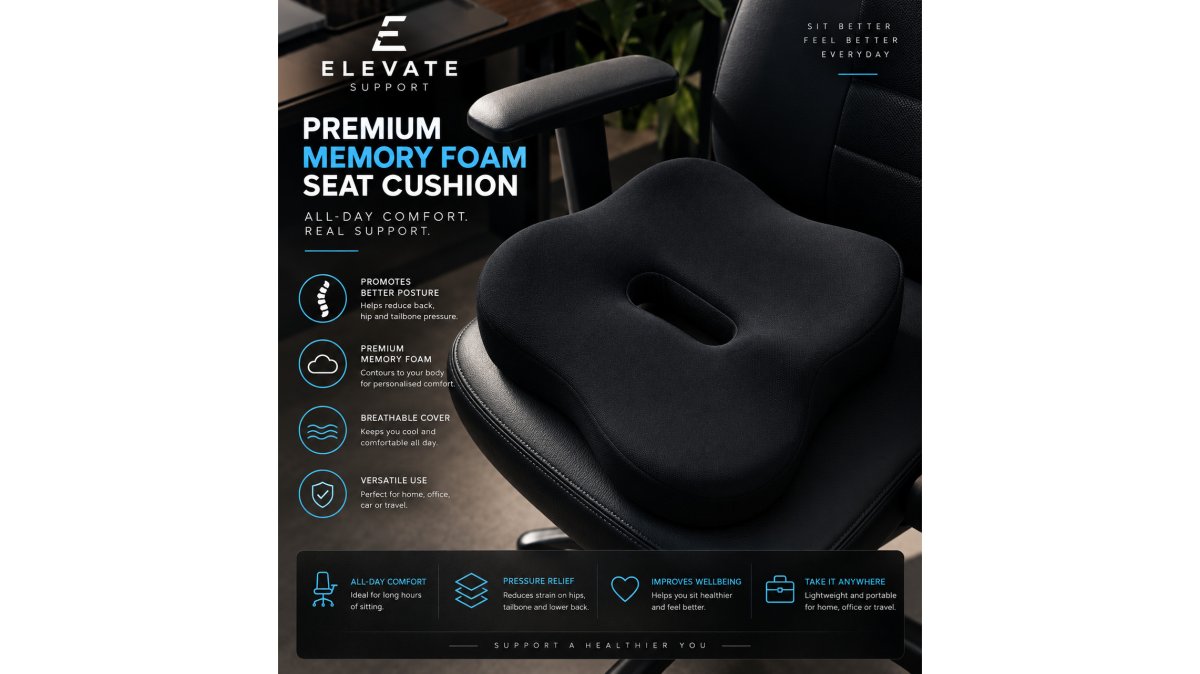
| Central-Groove Memory Foam Seat Cushion | £22.99 | Tailbone and hip relief | Central groove design, breathable cover |
| Memory Foam Lumbar Support Cushion | £17.99 | Lower back support | Contoured lumbar design, adjustable strap |
| Ergonomic Lumbar Support Cushion for Office Chair & Car | £29.99 | Professional drivers, long commutes | Premium support, adjustable strap, breathable |
| Memory Foam Car Neck Pillow | £15.99 | Neck and head support | Adjustable positioning, ergonomic contoured design |
How to Choose the Right Car Seat Cushion for Long Drives
The right car seat cushion depends on where your discomfort starts. Lower back pain calls for lumbar support; tailbone pressure requires central relief or a contoured shape; neck tension needs a separate neck pillow.


Fit matters more than most people realise: too large and the cushion won't sit properly, too small and it leaves gaps where pressure builds. The ElevateSupport Memory Foam Seat Cushion measures approximately 40 x 32 cm, fitting most standard car seats without sliding or bunching.
Memory Foam Density and Firmness: What Matters for Car Seats
Most guides tell you to look for "high-density" foam and stop there. That is not enough: density and firmness are separate specifications, and for a car seat you need to read both together.
Density is measured in kilograms per cubic metre (kg/m³), how much foam is packed into a given volume, and the best predictor of how long a cushion holds its shape. As a working rule:
- Under 40 kg/m³, soft and cheap, comfortable for the first few weeks, then prone to permanent compression where your sit bones load it.
- 40-60 kg/m³, the practical sweet spot for a car seat. Enough resilience to resist bottoming out on a long drive, still forgiving enough for daily commuting.
- Above 60 kg/m³, very durable but noticeably firmer on first contact and slower to warm and contour. Better suited to heavier drivers or all-day professional use than to a 20-minute school run.
Firmness is measured separately, usually as IFD or ILD (indentation force/load deflection), the force in newtons to compress a standard foam block by 25%. A foam can be high-density and still feel soft, so never assume density equals hardness.
Matching the specification to the driver
Foam specialists typically match the cushion to body weight and journey length rather than a single "best" number:
| Driver profile | Suggested density | Suggested firmness | Suggested thickness |
|---|---|---|---|
| Occasional driver, short trips | 40-45 kg/m³ | Soft to medium | 5-7 cm |
| Daily commuter, 30-60 minutes each way | 45-55 kg/m³ | Medium | 7-8 cm |
| Long-distance or professional driver | 55-60+ kg/m³ | Medium-firm | 8-10 cm |
| Heavier driver (over roughly 95 kg) | 55-60+ kg/m³ | Medium-firm | 8-10 cm |
| Tailbone or coccyx sensitivity | 45-55 kg/m³ | Medium | 7-8 cm with a central cutout |
Thickness interacts with everything else. Too thin and you feel the seat frame; too thick and you raise your hip point enough to alter your reach to the pedals, wheel and seat belt. An 8 cm cushion is a sensible ceiling for most vehicles, beyond that, check you can still depress the clutch or brake fully and that the belt crosses your shoulder, not your neck.
Why temperature changes the answer
Memory foam is temperature-sensitive: firm and slow to respond in a cold cabin, softer and more contouring once warm. A cushion that feels perfect in a warm showroom can feel unforgiving on a frosty 6am start. If you drive in cold conditions, lean towards the softer end of your density band; in heat, lean firmer.
What to check before you buy
- Look for a stated density in kg/m³, not just the word "memory". No figure at all is a signal.
- Check whether the foam is viscoelastic memory foam or a memory foam topper over a support core. Many good cushions bond a softer memory foam layer to a firmer base, contouring at the surface, support underneath.
- Ask about the returns window. Firmness is subjective, and the only reliable test is sitting on it in your own car for a week.
Car Seat Cushion for Back Pain: Ergonomic Support You Need
Back pain during driving often stems from poor lumbar support.
The Memory Foam Lumbar Support Cushion from ElevateSupport features a contoured shape designed for lower back support.
For drivers who spend 4+ hours weekly behind the wheel, a dedicated lumbar support cushion can help reduce back pain and fatigue (pubmed.ncbi.nlm.nih.gov).
If you're recovering from back injury or surgery, consult your physiotherapist before using any new cushion.
Tailbone and Hip Relief: Finding the Best Car Seat Cushion for Tailbone Pain
Tailbone pain during driving is common, especially on longer journeys.
The Central-Groove Memory Foam Seat Cushion is engineered for this purpose. The ergonomic central groove relieves pressure on your tailbone and supports proper spinal alignment.
Hip pain often accompanies tailbone pain: when your tailbone bears too much weight, your hips compensate by tensing. A contoured cushion that spreads weight across both areas can help address both problems.
If tailbone pain persists after two weeks of using a relief cushion, see a physiotherapist. Persistent coccyx pain can indicate underlying structural issues that require professional assessment.
Comfort Features That Matter: Breathability, Shape, and Durability
Three features separate a cushion you keep for years from one you abandon after a fortnight: heat management, shape, and durability under daily loading.
Breathability and heat management
Memory foam is closed-cell and dense, so it insulates, sitting for an hour traps body heat and moisture against your back and thighs, the most common complaint about memory foam car cushions. Breathability is three features working together:

- The cover fabric. Open-weave mesh, 3D spacer fabric and perforated covers allow air to move laterally and evaporate moisture. Smooth synthetic covers feel cool for the first minute and then trap heat.
- Channels or perforations in the foam itself. Some cushions have vertical air channels moulded into the foam so heat can escape downwards rather than building up at the contact surface.
- The base layer. A non-slip base that is also breathable prevents a heat trap between the cushion and the car seat. A solid rubber base does the opposite.
A practical test: press your palm flat on the cushion for 30 seconds. If your hand feels clammy when you lift it, the cover is not moving moisture. If it feels dry, the fabric is doing its job. In a hot cabin, a breathable cover is the difference between a comfortable hour and a sticky one; in winter, the same foam feels harder until the cabin warms.
Shape: what each geometry actually does
Shape is how a cushion redirects load away from the areas that hurt. The main options:
- Flat. Spreads weight evenly across the whole seat. Good general comfort, but does nothing for a specific pressure point.
- Wedge. Tapers from thick at the back to thin at the front, tilting your pelvis slightly forward. This restores the natural inward curve of the lower back and can reduce slumping on long drives. The trade-off is that it raises your hip point at the rear, so check your headroom and your reach to the pedals.
- Contoured. Moulded with raised side bolsters and a shaped centre so your hips sit in a cradle. This limits lateral sliding during cornering and keeps your weight centred, which helps on twisty roads.
Fit, safety and compatibility
Fit is not just about comfort, it affects how your safety systems work. Before buying any cushion:
- Seat belt routing. The lap belt must still sit low across your hips, not ride up over your stomach. A thick cushion can push the belt out of position. The shoulder belt should cross the middle of your shoulder and collarbone, not your neck.
- Airbag clearance. Do not add anything that raises you so high that your head is closer to the side airbag than the seat was designed for, and never place a cushion between you and a seat-integrated side airbag.
- Pedal reach and steering. After fitting, sit normally and check you can press the clutch, brake and accelerator fully to the floor without stretching, and that your arms are slightly bent at the wheel.
If you are unsure, fit the cushion and have someone check your driving position from outside the car, belt placement and head height are easier to judge from the passenger side.
Durability, care and realistic lifespan
A quality memory foam cushion should hold its shape for a significant period of daily use; cheaper foam compresses permanently within months, usually where your sit bones load it. Care routine that extends life:
- Remove and wash the cover according to the label, most are machine-washable at 30°C on a gentle cycle. Air-dry rather than tumble-dry, which can shrink the fabric and distort the foam.
- Spot-clean the foam with a mild soap solution and a cloth, then press out excess water with a towel. Never soak it, never machine-wash it, and never use bleach or solvent cleaners, they break down the cell structure.
- Air-dry completely before refitting. Damp foam loses resilience and can develop odour.
Signs it is time to replace: the cushion no longer springs back within seconds of standing up, a visible dip remains where you sit, or the cover has worn through at the edges. None are fixable, the foam has passed its useful life.
Long-distance drivers who spend four or more hours a week behind the wheel get the most from a medium-firm, breathable cushion with a removable washable cover and a shape matched to their specific pressure point, and they should re-check seat belt and pedal position every time they change vehicles.
Conclusion: Choosing Your Ideal Car Seat Cushion
Finding the best memory foam for car seats comes down to matching the cushion to your needs.
ElevateSupport offers a complete range of memory foam car seat cushions designed for different needs and budgets.
Start with the cushion that matches your primary pain point, many drivers see noticeable improvement.
Driving comfort shouldn't require hours of research or trial-and-error purchases. Shop our full range and find the support that transforms your driving experience. Shop Comfort.
Frequently Asked Questions
What type of foam is best for car seats?
Memory foam is the best choice for car seats because it contours to your body shape and distributes pressure evenly. Unlike standard foam, memory foam responds to body heat and weight, providing personalised support. High-density memory foam offers better durability and support for long drives without flattening quickly. Look for cushions with breathable fabric covers to prevent heat buildup during extended driving sessions.
How do I choose a memory foam cushion that fits my car seat?
Measure your car seat dimensions before purchasing. Most universal cushions are around 40 cm long by 32 cm wide, fitting standard car seats and office chairs. Check the product's stated dimensions and compare them to your seat. Consider whether you need a full seat cushion or a targeted lumbar support. Some cushions have non-slip bottoms to prevent shifting, which is essential for safe driving. Adjustable straps help secure lumbar cushions to your seat back.
What is the best foam density for a car seat?
For car seats, aim for high-density or very high-density memory foam. This density provides firm support without excessive softness that flattens quickly. Higher density foam maintains its shape through extended driving and resists motion absorption better, meaning less jolting when you hit bumps. Firmer foam also offers better posture support and pressure relief for long-distance driving, though personal preference varies, some drivers prefer slightly softer foam for initial comfort.
Are memory foam cushions suitable for long drives?
Yes, memory foam cushions are excellent for long drives when chosen correctly. They reduce pressure on your tailbone, lower back, and hips, which minimises fatigue during extended sitting. Breathable fabric covers help regulate temperature and prevent heat buildup. The ergonomic contoured shapes support proper spinal alignment, reducing strain on your neck and shoulders. For journeys over 4 hours, a cushion with a central groove or lumbar support section provides additional targeted relief and helps maintain good posture throughout your journey.
How long do memory foam car seat cushions last?
Quality memory foam cushions typically last for a significant period with regular use, depending on foam density and care. High-density foam resists degradation better than lower-density alternatives. Durability improves when you follow care instructions, keep the cushion clean, and avoid excessive moisture. Non-slip bottoms and reinforced seams extend lifespan. Regular inspection for flattening or wear helps you identify when replacement is needed. Investing in premium memory foam from the start ensures longer-lasting comfort and better value than cheaper alternatives that flatten quickly.