
Ergonomic Chairs: Budget Alternatives That Actually Work
Table of Contents
- Why Ergonomic Chairs Cost So Much (And What You're Actually Paying For)
- The Hidden Costs of Cheap Chairs: What Breaks First
- Best Seat Cushion for Desk Chair: Targeted Comfort Without Replacement
- Affordable Lumbar Support for Office Chair: Strategic Placement for Maximum Impact
- How to Improve Posture at Desk Without Buying a New Chair
- Building a Complete Ergonomic Setup on a Budget
- Ergonomic Chair Maintenance: Making Your Current Seat Last Longer
- Frequently Asked Questions
Last Updated: October 7, 2026
Why Ergonomic Chairs Cost So Much (And What You're Actually Paying For)
A premium ergonomic chair can easily cost between £400 and £1,200. That price tag often makes people wince. But understanding what drives those costs helps explain why ergonomic chair alternatives exist, and where you can actually save money without sacrificing comfort.
Expensive ergonomic chairs aren't expensive because of marketing hype. They're expensive because they combine several costly features: high-density memory foam, precision lumbar support mechanisms, synchro-tilt systems that allow your seat and backrest to move independently, breathable mesh backrests, and heavy-duty pneumatic lifts rated for repeated daily use.
The real issue is that most people don't need all of those features. You don't need a £900 chair to sit comfortably for eight hours. What you need is targeted support in the right places. That's where ergonomic chair alternatives come in.
The Hidden Costs of Cheap Chairs: What Breaks First
Budget office chairs fail in predictable ways. The foam compresses after three to six months of daily use, leaving you sitting on a hard surface again. The base cracks under weight. The tilt mechanism stops working smoothly. You end up replacing the chair anyway, which defeats the purpose of saving money upfront.
The real hidden cost of cheap chairs isn't the initial purchase price. It's the replacement cycle. A £150 chair that lasts 18 months costs more per month than a £600 chair that lasts five years. Over a decade, the cheap option becomes expensive.
This is where a different strategy makes sense. Instead of buying a cheap chair and replacing it frequently, you keep your existing chair and upgrade it strategically. Add targeted cushioning where it matters. Improve your desk setup. Use posture support where your body needs it most.
Best Seat Cushion for Desk Chair: Targeted Comfort Without Replacement
A quality seat cushion transforms an uncomfortable chair into a genuinely pleasant place to sit. The key is choosing one designed for your specific problem: lower back relief, tailbone pressure, or general seat comfort.

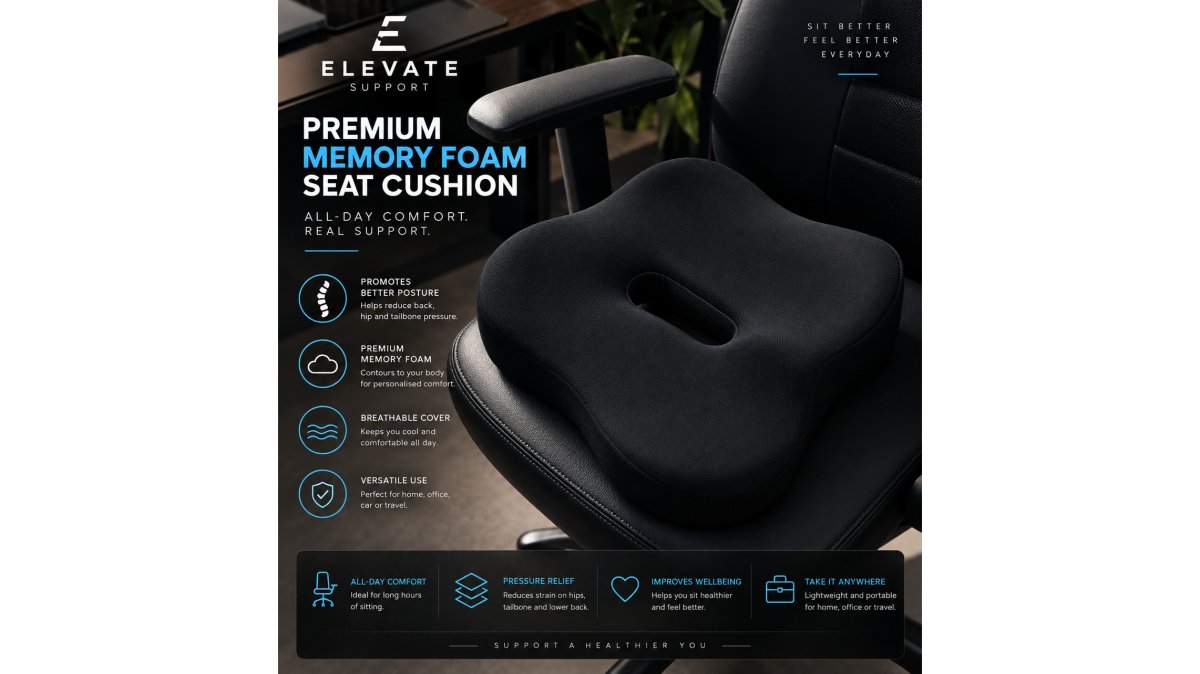
The best seat cushions use memory foam that maintains its shape over time. Unlike cheap foam that flattens, quality memory foam contours to your body weight and gradually returns to its original shape when you stand up.
For most office workers, the ElevateSupport Memory Foam Seat Cushion (£16.99) covers the basics effectively. It provides a softer, more supportive sitting surface and works in office chairs, car seats, and home seating.
If you spend extended periods sitting and experience tailbone or hip pressure, the Central-Groove Memory Foam Seat Cushion (£22.99) offers targeted relief. The central groove reduces pressure on your tailbone while the contoured design supports proper spinal alignment.
Lumbar Support Cushions for Lower Back Relief
Lower back pain during sitting usually comes from one of two sources: your chair doesn't support the natural curve of your spine, or your posture gradually slouches forward as the day progresses. A lumbar support cushion addresses both issues.
The Memory Foam Lumbar Support Cushion (£17.99) sits against your lower back and fills the gap between your spine and the chair. It's contoured to match the natural curve of your lumbar region, so it provides support without feeling rigid. The adjustable chair strap keeps it positioned correctly, even if you shift positions throughout the day.
For drivers and office workers who need portable lumbar support, the Ergonomic Lumbar Support Cushion for Office Chair & Car (£29.99) offers premium memory foam with breathable fabric. The adjustable strap system ensures it stays in place whether you're at your desk or behind the wheel.
Seat Cushions for Tailbone and Hip Pressure
Tailbone pain (coccyx pain) and hip pressure are common complaints from prolonged sitting. These issues often develop gradually, you don't notice them until they've become chronic discomfort. A seat cushion designed specifically for pressure relief can prevent that progression.
The Central-Groove Memory Foam Seat Cushion (£22.99) is purpose-built for this problem. The central groove relieves direct pressure on your tailbone, while the contoured foam distributes your weight across a wider area. This design supports proper spinal alignment and reduces the concentrated pressure that causes pain. The breathable fabric cover keeps you comfortable during long sitting sessions, and the non-slip bottom means the cushion stays in place.
Affordable Lumbar Support for Office Chair: Strategic Placement for Maximum Impact
You don't need to replace your entire chair to get effective lumbar support. Strategic cushion placement delivers most of the benefit at a fraction of the cost. The key is understanding where your back needs support most.
For lower back support, place a lumbar cushion directly against the small of your back, between your spine and the chair. This fills the gap that causes slouching and lower back strain.
If your chair has armrests that dig into your elbows or forearms, upgrade them with cushioning. The Ergonomic Armrest Cushions (£19.99) add soft, supportive padding to hard armrests, reducing pressure on your arms and shoulders.

For your feet, a footrest completes the ergonomic setup. Proper foot support reduces pressure on your lower back and improves overall posture.
How to Improve Posture at Desk Without Buying a New Chair
Poor posture develops gradually. You sit down to work, lean slightly forward to see your screen, and within an hour your shoulders are rounded and your lower back is compressed. By the end of the day, your neck aches and your back feels strained. Over weeks and months, this becomes chronic discomfort.
Memory Foam Lumbar Support Cushion →
Fixing posture without replacing your chair requires three changes: screen positioning, armrest support, and footrest placement. Each addresses a specific postural problem.
Monitor Height and Screen Positioning
Your screen position drives your entire posture. If your monitor is too low, you lean forward and round your shoulders. If it's too high, you crane your neck upward. The ideal position is eye level, your gaze should be slightly downward when looking at the centre of your screen.
Most office workers use a monitor that's too low. Laptops are the worst offenders; the screen is typically 15-20 centimetres below eye level when the keyboard is at a comfortable height. An adjustable monitor stand solves this problem. The Adjustable Monitor & Laptop Stand (£11.99) raises your screen to the correct height and allows you to adjust the angle for your specific setup. This single change often eliminates neck strain within the first week.

Armrest and Footrest Support
Your armrests should support your elbows at approximately 90 degrees when your arms are relaxed. If your armrests are too low or too high, your shoulders tense up to compensate. If your armrests are hard, pressure builds on your elbows and forearms.
The Ergonomic Armrest Cushions (£19.99) upgrade hard armrests with soft cushioning. This reduces shoulder tension and allows your arms to rest comfortably throughout the day. Pair this with a footrest to complete the setup.
A footrest keeps your feet flat and your legs at 90 degrees. This position reduces pressure on your lower back and helps maintain neutral spine alignment. The Memory Foam Footrest (£15.99) provides the cushioning your feet need during long sitting sessions.
Building a Complete Ergonomic Setup on a Budget
You can build a comprehensive ergonomic desk setup for under £100 using strategic products instead of one expensive chair. Here's how:
| Component | Product | Price | Purpose |
|---|---|---|---|
| Screen Height | Adjustable Monitor & Laptop Stand | £11.99 | Positions screen at eye level, reduces neck strain |
| Lumbar Support | Memory Foam Lumbar Support Cushion | £17.99 | Supports lower back curve, prevents slouching |
| Seat Comfort | Memory Foam Seat Cushion | £16.99 | Cushions sitting surface, reduces pressure |
| Armrest Comfort | Ergonomic Armrest Cushions | £19.99 | Pads hard armrests, reduces shoulder tension |
| Foot Support | Memory Foam Footrest | £15.99 | Supports feet at 90 degrees, improves posture |
| Total | , | £81.95 | Complete ergonomic setup |
This setup addresses every major postural problem: screen position, lumbar support, seat pressure, arm support, and foot positioning. It costs a fraction of a single premium chair and works with whatever chair you already own.
Ergonomic Chair Maintenance: Making Your Current Seat Last Longer
Your existing chair can last significantly longer if you maintain it properly. Simple care extends the life of both the chair and any cushions you add.
Memory foam cushions require minimal maintenance. Most ElevateSupport cushions have removable, washable covers.
For your chair itself, regular cleaning prevents dirt and sweat from breaking down the upholstery. Wipe down armrests and seat surfaces weekly with a damp cloth.
Check the base and casters regularly. If your chair rolls unevenly or the base shows cracks, address these issues early.
If your chair's tilt mechanism becomes stiff or squeaks, apply a small amount of silicone-based lubricant to the pivot points.
For cushions that have compressed over time, replacement is straightforward. Rather than buying a new chair, simply purchase a new cushion.
Expensive ergonomic chairs deliver genuine benefits, but they're not necessary for comfortable, healthy sitting.
Frequently Asked Questions
Can a seat cushion really make a cheap chair ergonomic?
A quality seat cushion addresses specific pressure points, tailbone, hips, and lower back, that cheap chairs often neglect. The Memory Foam Seat Cushion (£16.99) contours to your body and redistributes weight, reducing discomfort during long sitting periods. However, a cushion cannot fix structural problems like inadequate height adjustment or poor back support. Combine a seat cushion with a lumbar support cushion and monitor riser for a more complete ergonomic setup that rivals expensive chairs costing ten times as much.
Why are ergonomic chairs so expensive?
Premium ergonomic chairs cost £400-800+ because they include synchro-tilt mechanisms, breathable mesh backrests, adjustable lumbar support, and weight-tested components rated for 8+ hours daily use. Manufacturers also invest in ergonomic certification and warranty coverage. Budget alternatives work differently: instead of one chair doing everything, you layer affordable cushions and supports (lumbar cushion at £17.99, seat cushion at £16.99, armrest pads at £19.99) to target your specific pain points, often totalling under £100 while delivering the same pressure relief without the premium price.
How long does memory foam last before it needs replacing?
Quality memory foam typically lasts 3-5 years with daily use before noticeable compression occurs. Cheaper generic cushions often flatten within 6-12 months. Premium memory foam products like ElevateSupport's cushions are designed for durability and resist permanent flattening longer because they use higher-density foam that maintains its shape. To extend lifespan, rotate your cushion weekly, keep it clean according to care instructions, and avoid leaving it in direct sunlight. Most users find that a £17-23 cushion outlasts three or four bargain alternatives from online marketplaces.
Can one cushion work in both my office chair and car seat?
Yes, portable cushions are designed for this dual-use scenario. The Memory Foam Seat Cushion (£16.99) and Memory Foam Lumbar Support Cushion (£17.99) both feature lightweight designs and adjustable straps, making them easy to move between your desk chair, car seat, and home seating. The Ergonomic Lumbar Support Cushion for Office Chair & Car (£29.99) is specifically engineered for both environments with a breathable fabric cover and adjustable strap. Simply remove the cushion from one location and position it in the other, no tools required. This approach costs far less than buying separate cushions for each space.
What's the difference between lumbar support and seat cushions, which do I need?
Lumbar cushions target lower back support and spinal alignment, sitting against your backrest to reduce stress on the lumbar spine. Seat cushions address tailbone, hip, and thigh pressure by sitting on the chair surface itself. Many people benefit from both: a lumbar cushion handles back pain whilst a seat cushion prevents tailbone aching during extended sitting. If you can only choose one, start with a lumbar cushion (£17.99-29.99) for back-focused pain, or a seat cushion (£16.99-22.99) if your discomfort is in the hips or tailbone. The Central-Groove Memory Foam Seat Cushion (£22.99) is particularly effective for tailbone relief due to its ergonomic groove design.